
Have you ever dreamt of experiencing a cultural spectacle that’s both deeply spiritual and incredibly vibrant? If so, then mark your calendars for Easter Week in Málaga, or “Semana Santa” as it’s known here.
Easter in Spain is a breathtaking display of faith, art, and community, with each region adding its unique flavour. Andalusia truly takes centre stage for Semana Santa and in Málaga the traditions are particularly grand, fervent, and deeply ingrained in the local identity. The atmosphere is electric – a mix of solemn reflection and communal celebration that is truly unique.
Málaga Easter Week in 2026
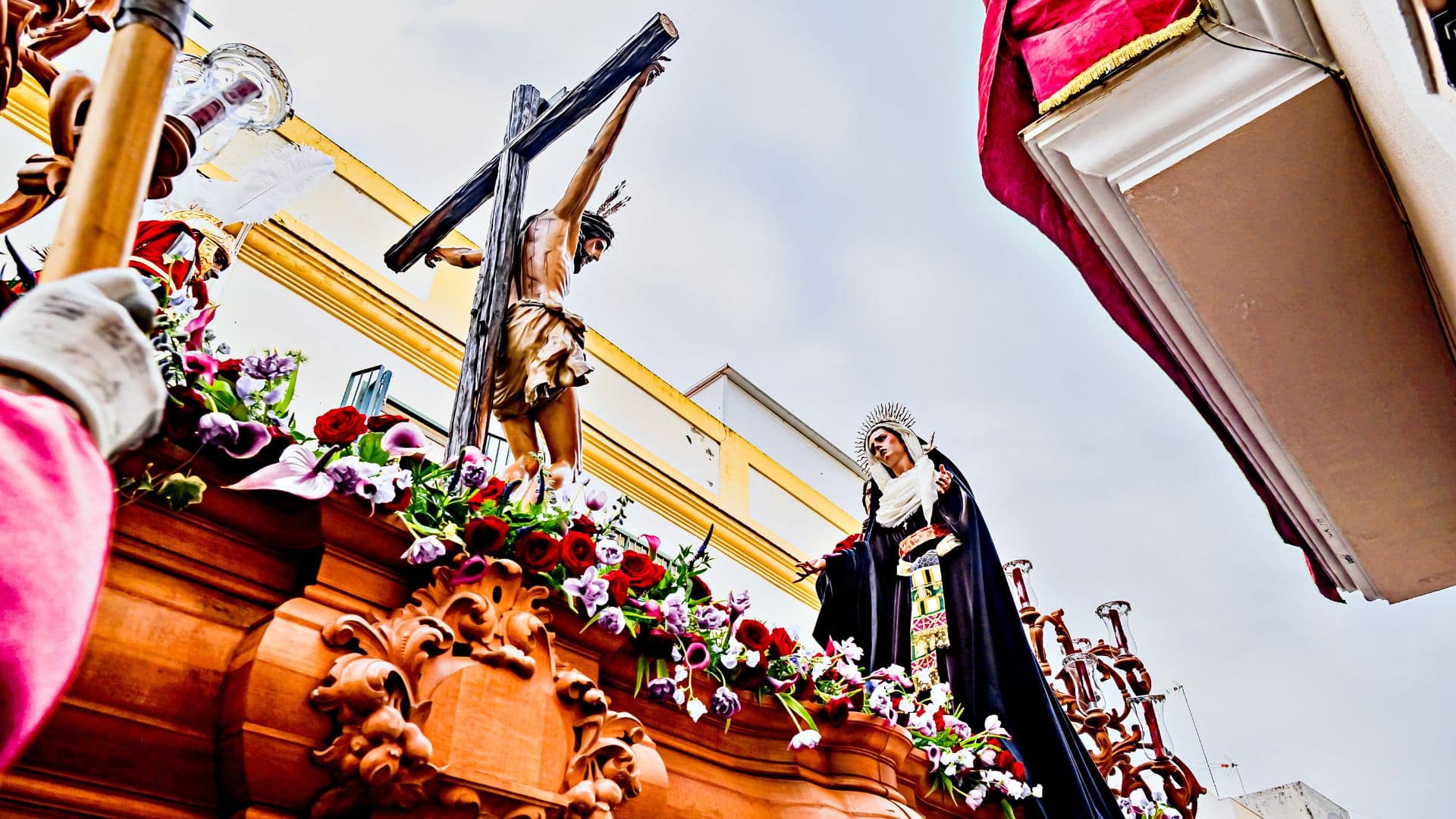
Málaga city transforms completely during Semana Santa. It’s an experience that will stay with you long after you’ve returned home. The streets become open-air cathedrals, the air thick with anticipation, and the sheer scale of the processions is awe-inspiring. Málaga’s Holy Week is characterized by its magnificent “tronos”, which are often larger and even more ornately decorated than those in other cities. The accompanying musical bands are also a highlight, their powerful scores adding to the drama and emotion of each procession.The city becomes an “open-air stage,” blending devotion with Mediterranean vibrancy.
Information about Málaga Easter week processions
Look out for the Málaga’s Holy Week programme which will show the times and routes of the parades and has a guide in English, or see the complete programme of parades on the Association of Brotherhoods website.
While specific timings vary, processions generally begin in the late afternoon or early evening, typically between 4 PM and 7 PM. They can then continue well into the night, with some of the larger ones finishing in the early hours of the morning. The main route, or “recorrido oficial,” is a key part of every procession, where each brotherhood passes through a designated area in the city centre, known as the tribuna.
Holy Week Processions in Málaga
Easter Week in Málaga officially kicks off on Palm Sunday and continues through Easter Sunday. Each day brings a new set of brotherhoods (cofradías) and their respective processions. The programme has been released, with multiple processions every day. The departure place and time, what time it reaches the Tribuna (the grandstand on Calle Larios) and the finish times are listed below:
Palm Sunday (Domingo de Ramos) March 29th: The week begins with joy and anticipation, and 9 different processions throughout the day, including the “Pollinica” procession, depicting Jesus’ entry into Jerusalem on a donkey.
Pollinica
Departure: 09:50 – San Agustín Church
Arrival at the Tribuna: 12:00
Arrival at the Cathedral: 14.10
Finish: 16:15 – San Agustín Church
Lágrimas y Favores
Departure: 15:00 – San Juan Church
Arrival at the Tribuna: 16:00
Arrival at the Cathedral: 18.10
Finish: 22:15 – San Juan Church
Dulce Nombre
Departure: 14:15 – Parroquia de La Divina Pastora
Arrival at the Tribuna: 16:40
Arrival at the Cathedral: 18.50
Finish: 22:50 – Plaza de Capuchinos
Salutación
Departure: 14:30 – Parroquia de la Santa Cruz y San Felipe Neri
Arrival at the Tribuna: 17:25
Arrival at the Cathedral: 19.35
Finish: 22:00 – Plazuela Santísimo Cristo la Sangre
Humildad
Departure: 15:15 – Basílica y Real Santuario de Santa María de la Victoria
Arrival at the Tribuna: 18:05
Arrival at the Cathedral: 20.15
Finish: 23:40 – Plaza del Santuario
Salud
Departure: 16:20 – San Pablo Church
Arrival at the Tribuna: 18:50
Arrival at the Cathedral: 21.00
Finish: 00:00 – Plaza de San Pablo
Humildad y Paciencia
Departure: 15:35 – Parroquia de San Vicente de Paúl
Arrival at the Tribuna: 19:35
Arrival at the Cathedral: 21.45
Finish: 02:15 – Plazuela Virgen de Dolores y Esperanza
Huerto
Departure: 17:45 – Parroquia de Los Santos Mártires Ciriaco y Paula
Arrival at the Tribuna: 20:10
Finish: 01:30 – Plazuela Virgen de la Concepción
Prendimiento
Departure: 16:30 – Parroquia de La Divina Pastora
Arrival at the Tribuna: 21.00
Finish: 01:30 – Hermandad del Prendimiento, Calle San Millán
Holy Monday (Lunes Santo) March 30th: There are six processions taking place, which tend to be more solemn, with a focus on Christ’s arrest and trial.
Pasión
Departure: 16:50 – Santos Mártires Church
Arrival at the Tribuna: 17:35
Arrival at the Cathedral: 19.45
Finish: 23:25 – Santos Mártires Church
Crucifixión
Departure: 16:50 – Parroquia del Buen Pastor
Arrival at the Tribuna: 17:35
Arrival at the Cathedral: 19.45
Finish: 23:25 – Parroquia del Buen Pastor
Gitanos
Departure: 16:45 – Parroquia de los Santos Mártires Ciriaco y Paula
Arrival at the Tribuna: 19:00
Finish: 00:30 – Parroquia de los Santos Mártires Ciriaco y Paula
Dolores del Puente
Departure: 17:30 – Parroquia de Santo Domingo
Arrival at the Tribuna: 19:50
Arrival at the Cathedral: 22.00
Finish: 00:30 – Santo Domingo Guzmán Church
Cautivo
Departure: 17:30 – Parroquia de San Pablo
Arrival at the Tribuna: 20.30
Finish: 02:30 – Parroquia de San Pablo
Estudiantes
Departure: 17:30 – Iglesia del Santo Cristo
Arrival at the Tribuna: 21:40
Finish: 01:00 – Iglesia del Santo Cristo
Holy Tuesday (Martes Santo) March 31st: Another day of six poignant processions, often depicting moments leading up to the crucifixion.
Rocío
Departure: 15:00 – Parroquia de San Lázaro
Arrival at the Tribuna: 17:40
Finish: 23.30 – Parroquia de San Lázaro
Las Penas
Departure: 17:45 – Iglesia de Santa María Reina y Madre
Arrival at the Tribuna: 18:40
Arrival at the Cathedral: 20.55
Finish: 01:00 – Iglesia de Santa María Reina y Madre
Nueva Esperanza
Departure: 15:45 – Parroquia de San Joaquín y Santa Ana
Arrival at the Tribuna: 19:30
Finish: 04:30 – Parroquia de San Joaquín y Santa Ana
Estrella
Departure: 17:45 – Santo Domingo Guzmán Church
Arrival at the Tribuna: 20:20
Finish: 02:15 – Parroquia de Santo Domingo
Rescate
Departure: 17:45 – Calle Agua Chapel
Arrival at the Tribuna: 21:10
Finish: 02:00 – Calle Agua Chapel
Sentencia
Departure: 19:15 – Parroquia de Santiago Apóstol
Arrival at the Tribuna: 22:00
Finish: 01:45 – Parroquia de Santiago Apóstol
Holy Wednesday (Miércoles Santo) April 1st: A day of seven significant processions, including some of the most revered images.
Fusionadas
Departure: 17:15 – Parroquia de San Juan Bautista
Arrival at the Tribuna: 18:00
Arrival at the Cathedral: 20.10
Finish: 01:45 – Parroquia de San Juan Bautista
Mediadora
Departure: 16:15 – Parroquia de San Patricio
Arrival at the Tribuna: 19:20
Arrival at the Cathedral: 21.30
Finish: 01:30 – Parroquia de San Patricio
Salesianos
Departure: 17:15 – Santuario de María Auxiliadora
Arrival at the Tribuna: 19:45
Arrival at the Cathedral: 22.04
Finish: 00:45 – Santuario de María Auxiliadora
Sangre
Departure: 18:00 – Plazuela Cristo de la Sangre
Arrival at the Tribuna: 20:19
Finish: 00:10 – Parroquia de San Felipe Neri
El Rico
Departure: 17:55 – Parroquia de Santiago Apóstol
Arrival at the Tribuna: 21:04
Finish: 01:05 – Parroquia de Santiago Apóstol
Paloma
Departure: 20:15 – Capilla de María Santísima de la Paloma
Arrival at the Tribuna: 22:07
Finish: 01:45 – Capilla de María Santísima de la Paloma
Expiración
Departure: 21:15 – Parroquia del Apóstol San Pedro
Arrival at the Tribuna: 23:10
Finish: 03:45 – Plaza de Enrique Navarro
Maundy Thursday (Jueves Santo) April 2nd: This is a very important day, featuring some of the largest and most spectacular processions, including the “Cristo de Mena” accompanied by Legionnaires. There are eight parades on Maundy Thursday, read on for the details.
Sagrada Cena
Departure: 17:00 — Iglesia Parroquial de San Carlos y Santo Domingo de Guzmán
Arrival at the Tribuna: 17:40
Finish: 22:55 — Iglesia Parroquial de San Carlos y Santo Domingo de Guzmán
Viñeros
Departure: 17:15 — Iglesia de la Aurora y Divina Providencia
Arrival at the Tribuna: 18:35
Arrival at the Cathedral: 20.45
Finish: 22:50 — Plaza de los Viñeros
Santa Cruz
Departure: 17:35 — Parroquia de la Santa Cruz y San Felipe Neri
Arrival at the Tribuna: 19:25
Arrival at the Cathedral: 21.35
Finish: 23:45 — Parroquia de la Santa Cruz y San Felipe Neri
Vera + Cruz
Departure: 19:00 — San Juan Church
Arrival at the Tribuna: 19:55
Arrival at the Cathedral: 22.05
Finish: 01:15 — San Juan Church
Mena
Departure: 18:55 — Parroquia de Santo Domingo
Arrival at the Tribuna: 20:20
Finish: 02:10 — Parroquia de Santo Domingo
Zamarrilla
Departure: 19:30 — Ermita de Zamarrilla
Arrival at the Tribuna: 21:35
Finish: 04:15 — Ermita de Zamarrilla
Misericordia
Departure: 19:50 — Parroquia de Nuestra señora del Carmen
Arrival at the Tribuna: 22:25
Finish: 04:00 — Parroquia de Nuestra señora del Carmen
Esperanza
Departure: 21:45 — Basílica del Paso y la Esperanza
Arrival at the Tribuna: 23:10
Finish: 03:45 — Basílica del Paso y la Esperanza
Good Friday (Viernes Santo) April 3rd: The most solemn day, commemorating the crucifixion. Processions are often silent or accompanied by slow, mournful music and there are eight during the day from 3pm.
Monte Calvario
Departure: 15:00 — Capilla del Monte Calvario
Arrival at the Tribuna: 18:40
Arrival at the Cathedral: 20.50
Finish: 00:00 — Basílica y Santuario de Santa María de la Victoria
Descendimiento
Departure: 16:30 — Capilla del Sagrado Descendimiento
Arrival at the Tribuna: 19:20
Arrival at the Cathedral: 21.35
Finish: 00:15 — Capilla del Sagrado Descendimiento
Amor y Caridad
Departure: 16:50 — Basílica y Real Santuario de Santa María de la Victoria
Arrival at the Tribuna: 20:00
Finish: 02:00 — Basílica y Real Santuario de Santa María de la Victoria
Dolores de San Juan
Departure: 19:05 — San Juan Church
Arrival at the Tribuna: 20:50
Arrival at the Cathedral: 23.05
Finish: 00:35 — San Juan Church
Soledad de San Pablo
Departure: 19:30 — Parroquia de San Pablo Apóstol
Arrival at the Tribuna: 21:30
Finish: 02:45 — Parroquia de San Pablo Apóstol
Piedad
Departure: 19:30 — Capilla de la Cruz del Molinillo
Arrival at the Tribuna: 22:15
Finish: 02:00 — Capilla de la Cruz del Molinillo
Sepulcro
Departure: 19:20 — Santa Ana Church
Arrival at the Tribuna: 22:40
Finish: 02:15 — Santa Ana Church
Servitas
Departure: 22:15 — Parroquia de la Santa Cruz y San Felipe Neri
Arrival at the Tribuna: 23:40
Finish: 03:30 — Parroquia de la Santa Cruz y San Felipe Neri
Easter Sunday (Domingo de Resurrección) April 5th: The week culminates in celebration of the Resurrection, with a single, joyful procession that is great for families.
Departure: 10:00 — Parroquia de San Julián
Arrival at the Tribuna: 11:05
Finish: 15:15 — Parroquia de San Julián
Route – Parroquia de San Julián, Nosquera, Santa Lucía, Granada, Plaza de la Constitución, Tribuna Principal, Marqués de Larios, Martínez, Atarazanas, Torregorda, Alameda Principal, Plaza de la Marina, Molina Lario, Plaza del Obispo, Molina Lario, Santa María, San Agustín, Echegaray, Granada, Méndez Núñez, Comedias, Nosquera & Parroquia de San Julián.
Which are the best processions at Easter in Málaga?
Choosing the “best” is tough because each has its unique charm and significance. However, some are particularly renowned:
- La Pollinica (Palm Sunday): A vibrant and joyful start to the week, often popular with families. La Pollinica represents Jesus’ entry into Jerusalem, and the atmosphere reflects that sense of celebration. The procession is filled with children carrying palms, creating a uniquely warm and festive tone that sets it apart from the more solemn processions later in the week. It leaves from San Agustín Church at 09.50 in the morning, reaching the Tribuna at 12.00 and the Cathedral at 14.0, before finishing back at the church at 16.15. Seeing this parade is the perfect way to start your Easter festivities.
- El Cautivo (Holy Monday): El Cautivo is the statue of Christ in a white tunic, with his hands bound and is one of the most deeply venerated figures in Málaga. His appearance on Holy Monday draws enormous crowds, and the atmosphere becomes charged with devotion and emotion. Even among the many powerful processions of the week, El Cautivo stands out for the intensity of public affection. While Holy Monday has several processions, El Cautivo is widely regarded as the essential one to see. It leaves Parroquia de San Pablo at 17.30, passes the Tribuna at 20.30 and ends back at the Parroquia de San Pablo at 02.30.
- El Cristo de Mena (Maundy Thursday): Accompanied by the Spanish Legion, this is a powerful and incredibly moving procession, famous for its military precision and hymn. Jueves Santo is considered a peak day of Semana Santa, and Mena is one of its central protagonists. The combination of military solemnity, popular devotion, and the dramatic aesthetic of the procession draws massive crowds every year. The Cristo de Mena departs at 18.55 from its Casa Hermandad next to the Iglesia de Santo Domingo, in the El Perchel district — the traditional home of the Congregación de Mena. It arrives at the Tribuna at 20.20 and finishes back at the Santo Domingo church at 2am.
- El Sepulcro (Good Friday): Good Friday in Málaga is already marked by silence and reflection, but El Sepulcro is the moment when that atmosphere reaches its peak. The procession represents Christ dead in the tomb, and the entire city shifts into a more contemplative mood as it passes. The Cristo Yacente (Christ laid out in the tomb) and the Virgen de la Soledad are carried on tronos that are deliberately restrained and dignified. Where other processions are grand or emotional, El Sepulcro is austere, refined, and deeply symbolic. The procession leaves from the Iglesia de Santa Ana, which is the headquarters (casa hermandad) of the Hermandad del Santo Sepulcro. It’s located in the historic centre, just a short walk from the Cathedral. It departs at 19.20 and arrives at the Tribuna at 22.40, finishing back at the church at 2am.
- Domingo de Resurrección (Easter Sunday): This procession feels like a release and a burst of joy after the intensity and solemnity of the week. If you’ve followed the processions from Palm Sunday to Good Friday, this one ties the whole emotional arc together. After days of silence, mourning, and reflection, Easter Sunday brings light, music, and celebration. The procession of the Hermandad de Jesús Resucitado y María Santísima Reina de los Cielos is designed to express that shift — trumpets, white flowers, bright banners, and a completely different energy. The trono of Jesús Resucitado is one of the most radiant of the week — gold, white, and full of movement. The Virgin, Reina de los Cielos, is equally striking, with a regal, triumphant aesthetic that contrasts sharply with the sorrow of Good Friday. The procession leaves the Parroquia de San Julián at 10.00, arrives at the Tribuna, and concludes at 15.15, bringing Semana Santa to a close.
Where’s the best place to see the Easter processions in Málaga?
Because Málaga’s Easter parades are so famous, expect big crowds. Finding a good spot can be a challenge, but here are some tips.
The prime viewing spots are Plaza de la Constitución and Calle Larios. They are great because of their central location and wider spaces, but be prepared for intense crowds.
Walk along the Official Route before the parade and see if there are any spaces, or cafes or bars with tables with good views. The route includes; Alameda Principal, Calle Marqués de Larios, and Calle Granada. These areas offer excellent views, but they get incredibly crowded.
If you can’t find a place, or don’t like the press of people, check out the smaller side streets just off the main route. They can offer a more intimate experience and fewer crowds, especially as the processions make their way to and from their churches.
The best place to see the parades is from a balcony overlooking the route. Some businesses and individuals rent out balconies on this date for a better view of the processions. It’s a good idea if you want to avoid the crowds.
What about buying a seat?
Along the “recorrido oficial,” rows of chairs are set up and you can buy a seat. These seats offer guaranteed views and a more comfortable experience, especially if you plan to watch multiple processions. They are highly sought after and usually go on sale well in advance (often in February or March). Keep an eye on the official Málaga Holy Week website (Agrupación de Cofradías) for information on how to purchase them. It’s a fantastic investment for a stress-free viewing experience.
How long do the processions last?
This varies significantly. Shorter processions might last a couple of hours, while the larger, more elaborate ones can easily stretch for six to eight hours, or even longer! Remember, these brotherhoods are traveling a considerable distance, and the “pasos” are incredibly heavy, requiring frequent stops and changes of “costaleros.”
Are they suitable for children?
Absolutely! While some of the later, more solemn processions might be a bit much for very young children due to the crowds and long hours, many families attend. The vibrant colours, the music, and the sheer spectacle can be captivating for kids.
The best parades for families are the joyous processions on Palm Sunday and Easter Sunday. These also usually happen earlier in the day, so are easier for kids to handle. It’s a great opportunity to introduce them to Spanish culture and traditions.
Just be prepared for potential boredom during long waits and ensure they have snacks and drinks. Strollers can be difficult to manoeuvre in dense crowds, so consider a carrier for infants.
What about cultural etiquette during Holy Week?
Easter parades are welcoming to all, but of course they are religious celebrations and taken very seriously, so respect and consideration are required. We recommend wearing smart casual clothing, as people are usually very dressed up, and avoid revealing clothing, particularly if you plan to go into any of the churches. Try to maintain a respectful silence, particularly during solemn moments or when a “saeta” is being sung. Be mindful of others, try not to block anyone’s view and don’t take flash photography of the statues.
Patience is required, as these are busy occasions with very slow-moving processions.
Things to do in Málaga at Easter
While Semana Santa is the main event at this time of year, it’s far from the only thing to do in Málaga. It’s a vibrant city, full of culture, history and art, not to mention great beaches and fabulous restaurants. Here are a few highlights –
- Málaga is the beating epicentre of art on the Costa del Sol. You can immerse yourself in art and culture at any of the over 40 art galleries and museums. Two of the best are the Picasso Museum and the Carmen Thyssen Museum, but there are many more to choose from.
- Explore stunning Moorish architecture in the Alcazaba and Gibralfaro Castle and enjoy panoramic views of the city.
- Enjoy a stroll along the modern port area Muelle Uno, grab a meal, or do some shopping.
- Visit the stunning Botanical Garden, it’s a peaceful escape from the city hustle and bustle.
- If the weather is warm, enjoy a relaxing walk along Malagueta beach, it’s easy to reach from the centre of town.
Please be aware that there are lots of Bank Holidays over the Easter Week and so shops, galleries and museums may be closed, so check opening hours before visiting.
How to plan your Easter holidays in Málaga?
Due to the popularity of the parades in Málaga, anticipate crowds, high demand for accommodation, and city‑wide street closures during the Easter Week. This makes planning ahead even more important.
- Decide where you’ll stay and book early: Easter marks the start of the high season on the Costa del Sol and is a popular time to visit. Especially in Málaga City itself, within easy reach of the parade routes, accommodation fills up incredibly fast and prices can soar. More availability and better prices are available outside of the city, or in any of the towns along the coast. You could choose to base yourself in a Benalmadena holiday rental, or stay in Fuengirola and take the train into Málaga. Alternatively, you could choose to stay in Marbella Old Town, which also has Easter parades, and arrange a private transfer to take you to Málaga and back for the day. Check out our selection of holiday rentals in Marbella Old Town.
- Plan Your Procession Viewing: Decide which processions you want to see and research their routes and times. Download a map of the city and mark the official route and look into where the best spots will be to stand. Depending on your commitment, you can arrive early to get a good spot, or play it by ear, understanding that you’ll have to squeeze in among the crowds.
- Dress appropriately: Comfortable shoes are a must and layers is a good idea as the weather can be changeable at this time of year. Choose an outfit you might wear for a meal with the family in a nice restaurant or a christening and you’ll blend in. Bring a bottle of water and some snacks too.
Easter Week in Málaga is more than just a holiday; it’s a profound cultural immersion that will leave you with lasting memories. So, start planning your trip to our beautiful city for 2026, and prepare to be enchanted by the magic of Semana Santa!
